

Hey there! As a supplier of Spunbond Non - Woven Machines, I've had my fair share of experiences with these amazing pieces of equipment. One of the most crucial aspects of operating a spunbond non - woven machine is adjusting the temperature correctly. In this blog, I'll share some tips and tricks on how to do just that.
First off, let's understand why temperature adjustment is so important. The temperature in a spunbond non - woven machine affects the quality of the non - woven fabric produced. If the temperature is too low, the polymer may not melt properly, resulting in uneven fibers and a weak fabric. On the other hand, if the temperature is too high, the polymer can degrade, leading to discoloration and a reduction in the fabric's strength.
The first step in adjusting the temperature is to know the melting point of the polymer you're using. Different polymers have different melting points. For example, polypropylene, which is commonly used in spunbond non - woven production, has a melting point of around 160 - 170°C. You can find this information on the polymer's technical data sheet. Once you know the melting point, you can set the initial temperature of the extruder, which is the part of the machine that melts the polymer.
When setting the temperature of the extruder, it's a good idea to start a bit lower than the melting point and then gradually increase it. This allows you to closely monitor the melting process. You can check the polymer's state by looking at the extruder's output. If the polymer is coming out in chunks or has an uneven texture, it means it's not fully melted, and you need to raise the temperature a bit more.
Another important area where temperature control is crucial is the spinneret. The spinneret is where the molten polymer is forced through tiny holes to form fibers. The temperature here needs to be carefully maintained to ensure that the fibers are of uniform diameter. A too - low temperature can cause the polymer to solidify prematurely in the spinneret holes, clogging them. To prevent this, you can use a temperature - controlled jacket around the spinneret. This jacket helps to keep the temperature stable and within the optimal range.
The quenching zone is also a key part of the machine where temperature adjustment matters. After the fibers are formed at the spinneret, they need to be cooled down quickly to solidify. The temperature of the quenching air or liquid used in this zone affects the fiber's properties. If the quenching is too rapid, the fibers may become brittle. If it's too slow, the fibers can stick together. You can adjust the temperature of the quenching medium to find the right balance.
Now, let's talk about the role of sensors in temperature adjustment. Most modern spunbond non - woven machines are equipped with temperature sensors at various points, such as the extruder, spinneret, and quenching zone. These sensors continuously monitor the temperature and send the data to the machine's control system. You can use this data to make real - time adjustments. For example, if the sensor in the extruder shows that the temperature is dropping, you can increase the heat output to maintain the desired temperature.
In addition to these basic steps, it's also important to consider the ambient temperature. If you're operating the machine in a very hot or cold environment, it can affect the machine's internal temperature. In a hot environment, you may need to increase the cooling capacity of the machine. In a cold environment, you may need to pre - heat the polymer more to reach the melting point.
Regular maintenance of the machine is also essential for accurate temperature adjustment. Over time, the heating elements in the extruder and other parts of the machine can wear out, leading to inaccurate temperature readings and control. Make sure to check and replace these elements as needed.
I've found that keeping a log of temperature settings and the quality of the non - woven fabric produced is very helpful. This log can serve as a reference for future production runs. You can note down the temperature settings that worked well and those that didn't, along with any issues you encountered.
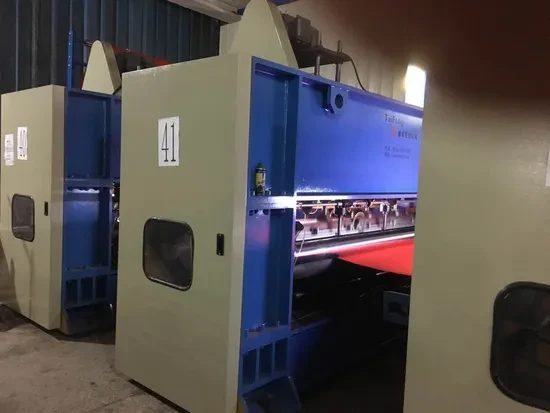

Now, if you're in the market for a high - quality spunbond non - woven machine, we've got you covered. Check out our Equipment Spunbond Non - Woven page to learn more about our state - of the - art machines. Our High Quality Non - woven Machine is designed to give you precise temperature control and excellent production results. And if you're interested in other types of non - woven production, our Production Line Needle Punched Felt Machine might be just what you need.
If you have any questions about temperature adjustment or our machines in general, don't hesitate to reach out. We're always happy to help you with your non - woven production needs. Whether you're a small - scale producer or a large - scale manufacturer, we can provide you with the right solutions. Contact us today to start a conversation about how we can meet your requirements and take your non - woven production to the next level.
References:
- Technical data sheets of common polymers used in non - woven production
- Manufacturer's manuals for spunbond non - woven machines