

In the realm of non - woven fabric production, spunbond non - woven materials have gained significant popularity due to their versatility, durability, and cost - effectiveness. As a leading Equipment Spunbond Non - woven supplier, we understand the growing demand for products with enhanced functionality, especially anti - bacterial properties. In this blog post, we will explore various methods to endow equipment spunbond non - woven with anti - bacterial properties.
The Significance of Anti - Bacterial Spunbond Non - woven
Spunbond non - woven fabrics are used in a wide range of applications, from medical and hygiene products to filtration systems and automotive interiors. In many of these applications, the presence of bacteria can pose significant risks. For example, in medical and hygiene products such as surgical gowns, masks, and diapers, anti - bacterial properties can prevent the growth and spread of harmful microorganisms, thereby protecting the health of users. In filtration systems, anti - bacterial non - woven fabrics can extend the lifespan of the filter by preventing the growth of bacteria that can clog the pores and reduce filtration efficiency.
Methods to Endow Anti - Bacterial Properties
Incorporation of Anti - Bacterial Agents during Production
One of the most common methods is to incorporate anti - bacterial agents directly into the polymer melt during the spunbond non - woven production process. There are several types of anti - bacterial agents that can be used:
-
Silver - based Agents: Silver has long been recognized for its strong anti - bacterial properties. Silver ions can disrupt the cell membranes of bacteria, inhibit their growth, and even cause their death. When silver - based anti - bacterial agents are added to the polymer melt, they are uniformly distributed throughout the non - woven fibers. This ensures long - lasting anti - bacterial protection as the silver ions are continuously released from the fibers' surface. However, the cost of silver - based agents can be relatively high, which may increase the production cost of the non - woven fabric.
-
Quaternary Ammonium Compounds: These compounds are another popular choice for anti - bacterial treatment. They work by interacting with the bacterial cell membrane, altering its permeability and leading to cell death. Quaternary ammonium compounds are relatively inexpensive and can be easily incorporated into the polymer matrix. However, their anti - bacterial efficacy may be affected by factors such as pH and the presence of other chemicals.
-
Natural Anti - Bacterial Agents: Some natural substances, such as essential oils (e.g., tea tree oil, eucalyptus oil) and chitosan, also possess anti - bacterial properties. Incorporating these natural agents into the spunbond non - woven production can provide a more environmentally friendly alternative. Chitosan, for example, is a biodegradable polymer derived from chitin, which can be found in the shells of crustaceans. It has been shown to have broad - spectrum anti - bacterial activity against both Gram - positive and Gram - negative bacteria.
Surface Coating
Another approach is to apply an anti - bacterial coating to the surface of the spunbond non - woven fabric after production. This method has the advantage of allowing for a more targeted application of the anti - bacterial agent and can be used to enhance the anti - bacterial properties of existing non - woven products.
- Spray Coating: In this method, a solution containing the anti - bacterial agent is sprayed onto the surface of the non - woven fabric. The spray can be applied using a variety of equipment, such as air - assisted spray guns or electrostatic sprayers. Spray coating is a relatively simple and cost - effective method, but it may result in uneven distribution of the anti - bacterial agent, especially if the fabric has a complex surface structure.
- Dip Coating: The non - woven fabric is dipped into a bath containing the anti - bacterial solution. This ensures a more uniform coating of the anti - bacterial agent on the fabric surface. However, dip coating may require additional drying and curing steps, which can increase the production time and energy consumption.
Plasma Treatment
Plasma treatment is a more advanced technique that can be used to modify the surface properties of the spunbond non - woven fabric and enhance its anti - bacterial properties. Plasma is a partially ionized gas that can react with the surface of the fabric to create reactive sites. These reactive sites can then be used to graft anti - bacterial molecules onto the fabric surface.
- Advantages of Plasma Treatment: Plasma treatment is a dry process, which means it does not require the use of large amounts of water or chemicals. It can also be precisely controlled to modify only the surface of the fabric without affecting its bulk properties. Additionally, plasma - treated surfaces can have better adhesion of anti - bacterial agents, resulting in more durable anti - bacterial performance.
- Challenges of Plasma Treatment: The equipment required for plasma treatment can be expensive, and the process may need to be carried out in a controlled environment. Moreover, the long - term stability of the grafted anti - bacterial molecules may be affected by factors such as washing and abrasion.
Quality Control and Testing
Once the spunbond non - woven fabric has been endowed with anti - bacterial properties, it is essential to conduct quality control and testing to ensure its effectiveness. There are several standard test methods available:
- AATCC Test Method 100: This method measures the percentage reduction of bacteria on the fabric surface after a specified contact time. The fabric sample is inoculated with a known amount of bacteria, and after a certain period, the number of surviving bacteria is counted. A high percentage reduction indicates good anti - bacterial performance.
- JIS L 1902: This is a Japanese standard test method for evaluating the anti - bacterial properties of textiles. It assesses both the bacteriostatic and bactericidal effects of the fabric. Similar to the AATCC method, it involves inoculating the fabric with bacteria and measuring the change in the number of bacteria over time.
Our Role as an Equipment Spunbond Non - woven Supplier
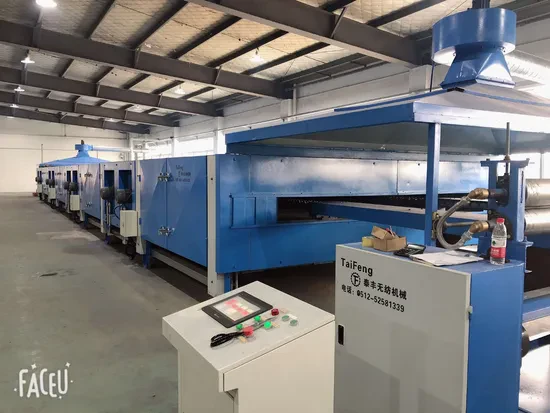
As a trusted Equipment Spunbond Non - woven supplier, we are committed to providing our customers with high - quality non - woven products with enhanced anti - bacterial properties. We have state - of - the - art Fabric Making Machine Production Equipment that allows us to incorporate anti - bacterial agents precisely during the production process. Our Spunbond Nonwoven Fabric Manufacturing process is optimized to ensure uniform distribution of the anti - bacterial agents throughout the non - woven fibers, resulting in consistent and reliable anti - bacterial performance.
We also offer customized solutions to meet the specific needs of our customers. Whether you require a certain level of anti - bacterial efficacy, a particular type of anti - bacterial agent, or a specific fabric structure, our team of experts can work with you to develop the ideal product. Our Producing Non - Woven Fabric process is flexible and can be adjusted to accommodate different production requirements.
Conclusion
Endowing equipment spunbond non - woven with anti - bacterial properties is a crucial step in meeting the diverse needs of various industries. By incorporating anti - bacterial agents during production, applying surface coatings, or using advanced techniques such as plasma treatment, we can enhance the functionality and value of the non - woven fabric. As a leading Equipment Spunbond Non - woven supplier, we are dedicated to providing innovative solutions and high - quality products. If you are interested in our anti - bacterial spunbond non - woven products or would like to discuss your specific requirements, please feel free to contact us for procurement and negotiation.

References
- AATCC Technical Manual. (20XX). AATCC Test Method 100 - Antibacterial Finishes on Textile Materials: Assessment.
- Japanese Industrial Standards Committee. (20XX). JIS L 1902 - Testing method for antibacterial activity and efficacy.
- Silver, S. (2003). Bacterial silver resistance: molecular biology and uses and misuses of silver compounds. FEMS Microbiology Reviews, 27(2 - 3), 341 - 353.
- Rabea, E. I., Badawy, M. E. T., Stevens, C. V., Smagghe, G., & Steurbaut, W. (2003). Chitosan as antimicrobial agent: applications and mode of action. Biomacromolecules, 4(6), 1457 - 1465.