

Hey there! I'm a supplier of Spunbond Non-Woven Machines, and today I'm gonna talk about the raw materials used in these machines. If you're in the non-woven industry or just curious about how these machines work, this blog is for you.
Polypropylene (PP)
Let's start with polypropylene, which is hands down the most commonly used raw material in spunbond non-woven machines. Why is it so popular? Well, it's got a bunch of great properties. First off, it's lightweight. This means that the non-woven fabrics made from polypropylene are easy to handle and transport. Whether you're making disposable medical gowns or shopping bags, the light weight is a huge plus.
Another awesome thing about polypropylene is its chemical resistance. It can withstand exposure to a wide range of chemicals without getting damaged. This makes it suitable for use in industries where contact with chemicals is common, like the agricultural and chemical industries. For example, it can be used to make protective covers for chemical storage tanks.
Polypropylene also has good heat resistance. It can maintain its shape and properties at relatively high temperatures. This is important in the manufacturing process, as the spunbonding process involves heating the polymer to a molten state. The heat resistance of polypropylene ensures that it can be processed smoothly without degrading.
You can check out our Spunbond Non-Woven Machine which is specifically designed to work with polypropylene and other raw materials efficiently.
Polyethylene (PE)
Next up is polyethylene. It's another widely used raw material in the non-woven industry. Polyethylene comes in different types, such as low-density polyethylene (LDPE) and high-density polyethylene (HDPE).
LDPE is known for its flexibility and softness. Non-woven fabrics made from LDPE are often used in applications where a soft touch is required, like baby wipes and feminine hygiene products. It also has good moisture resistance, which helps to keep the products dry and fresh.
HDPE, on the other hand, is more rigid and has higher strength. It's commonly used in applications that require durability, such as geotextiles for soil stabilization and erosion control. HDPE non-woven fabrics can withstand the stresses of outdoor environments and provide long-lasting performance.
One of the advantages of using polyethylene in spunbond non-woven machines is its ease of processing. It has a relatively low melting point, which means less energy is required to melt it during the manufacturing process. This can lead to cost savings in the long run.
Polyester (PET)
Polyester is also a popular choice for spunbond non-woven production. It has excellent mechanical properties, such as high tensile strength and tear resistance. Non-woven fabrics made from polyester are strong and durable, making them suitable for a wide range of applications, including automotive interiors, filtration media, and industrial wipes.
Another great feature of polyester is its dimensional stability. It doesn't shrink or stretch easily, even under different environmental conditions. This is important in applications where precise dimensions are required, like in the manufacturing of clothing interlinings.
Polyester also has good resistance to UV radiation. This makes it a good choice for outdoor applications, such as遮阳网 (sorry, I meant sunshades) and outdoor furniture covers. It can withstand prolonged exposure to sunlight without fading or deteriorating.
If you're interested in producing non-woven fabrics with polyester, our Spunbond Non-Woven Machine can handle it with ease.
Biodegradable Polymers
In recent years, there has been a growing demand for biodegradable non-woven products due to environmental concerns. As a result, biodegradable polymers are becoming more popular as raw materials for spunbond non-woven machines.
One of the most common biodegradable polymers is polylactic acid (PLA). It is derived from renewable resources, such as corn starch or sugarcane. PLA has similar properties to traditional polymers, such as good mechanical strength and processability. Non-woven fabrics made from PLA are biodegradable, which means they can break down naturally in the environment over time. This makes them a more sustainable alternative to traditional non-woven materials.
Another biodegradable polymer is polyhydroxyalkanoates (PHA). PHA is produced by microorganisms and has excellent biocompatibility. It can be used in medical applications, such as wound dressings and tissue engineering scaffolds.
Using biodegradable polymers in spunbond non-woven machines not only helps to reduce environmental impact but also meets the growing consumer demand for sustainable products.
Other Additives
In addition to the main polymers, there are often other additives used in the production of spunbond non-woven fabrics. These additives can enhance the properties of the non-woven fabrics or improve the manufacturing process.
For example, antioxidants are often added to prevent the polymers from oxidizing during the manufacturing process and storage. This helps to maintain the quality and performance of the non-woven fabrics over time.
UV stabilizers can be added to improve the UV resistance of the non-woven fabrics, especially for outdoor applications. They help to prevent the fabrics from fading and deteriorating due to sunlight exposure.
Flame retardants can be added to make the non-woven fabrics fire-resistant. This is important in applications where fire safety is a concern, such as in the manufacturing of curtains and upholstery.
Colorants are also commonly used to give the non-woven fabrics different colors. Our Colorful Non-Woven production capabilities allow you to create non-woven fabrics in a wide range of colors to meet your specific needs.
Conclusion
So, there you have it! The raw materials used in spunbond non-woven machines are diverse, each with its own unique properties and applications. Whether you're looking for lightweight and chemical-resistant polypropylene, flexible and soft polyethylene, strong and durable polyester, or environmentally friendly biodegradable polymers, there's a raw material that's right for your needs.
As a supplier of Spunbond Non-Woven Machines, we're committed to providing you with high-quality machines that can handle a variety of raw materials. Our machines are designed to be efficient, reliable, and easy to operate.
If you're interested in learning more about our machines or have any questions about the raw materials used in spunbond non-woven production, feel free to reach out to us. We'd be happy to discuss your requirements and help you find the best solution for your business.

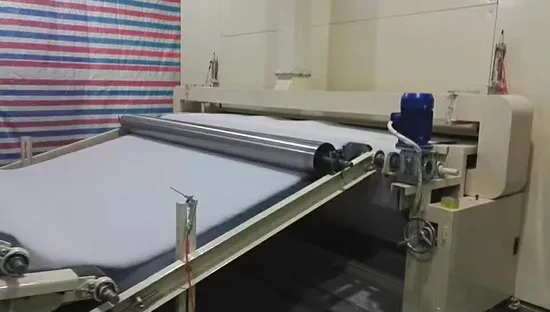
And if you're looking for other non-woven production lines, check out our New Design Spray-Bonded Wadding Production Line. It's a great addition to our product range.
Let's work together to create high-quality non-woven products that meet your specific needs. Contact us today to start the conversation!
References
- "Nonwoven Fabric Handbook" by David J. Bryant
- "The Science and Technology of Nonwovens" by W. Albrecht, P. K. C. Lee, and T. Peijs