

As a supplier of Equipment Spunbond Non-Woven, I've had my fair share of experiences in understanding what makes the quality of this product tick. There are quite a few factors that come into play, and I'm gonna break them down for you in this blog.
Raw Materials
First up, the raw materials are like the building blocks of our Equipment Spunbond Non-Woven. The type and quality of polymers used have a huge impact. Polypropylene is a common choice, and its melt flow index (MFI) matters a lot. A higher MFI usually means better flowability during the spinning process, which can lead to finer fibers and a more uniform non-woven structure. But if the MFI is too high, the fibers might be too thin and weak, affecting the overall strength of the non-woven.
The purity of the polymers also counts. Impurities can cause defects in the fibers, like breaks or uneven thickness. For example, if there are small particles in the polymer resin, they can clog the spinnerets during the spinning process, resulting in holes or weak spots in the non-woven fabric. We always make sure to source high-quality polymers from reliable suppliers to ensure the best starting point for our products.
Spinning Process
The spinning process is where the magic happens, turning those polymers into fibers. The temperature during spinning is crucial. If it's too low, the polymer won't melt properly, and the fibers will be thick and uneven. On the other hand, if the temperature is too high, the polymer might degrade, leading to weaker fibers and a lower-quality non-woven.
The speed of the spinnerets also affects the fiber diameter. Faster spinning speeds generally result in finer fibers. But we have to find the right balance because if the speed is too high, the fibers might not solidify properly, and they could stick together, causing issues with the fabric's appearance and performance.
Another important aspect is the air flow in the spinning chamber. Proper air flow helps to cool and stretch the fibers, giving them the right shape and strength. If the air flow is uneven, some fibers might be cooler and stronger than others, leading to an inconsistent non-woven fabric.
Bonding Process
Once the fibers are formed, they need to be bonded together to create a stable non-woven fabric. There are different bonding methods, such as thermal bonding, chemical bonding, and mechanical bonding.

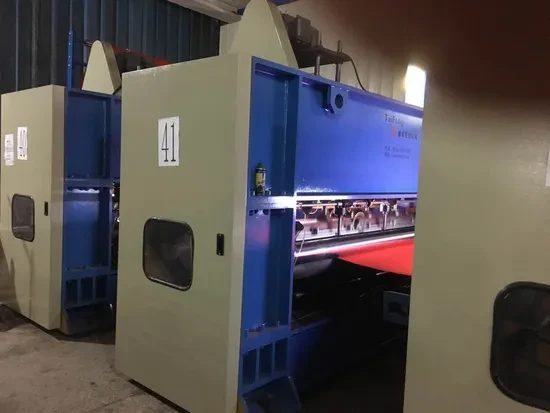
In thermal bonding, the fibers are heated to a certain temperature so that they soften and stick together at the contact points. The temperature and pressure used in this process are critical. If the temperature is too low, the fibers won't bond properly, and the fabric will be weak. If it's too high, the fibers might melt completely, losing their structure and properties.
Chemical bonding involves using adhesives to bond the fibers. The type and amount of adhesive used can affect the fabric's strength, flexibility, and even its environmental friendliness. We always look for adhesives that are effective but also meet the relevant safety and environmental standards.
Mechanical bonding, like needle punching, involves using barbed needles to entangle the fibers. The density of the needle punching and the needle type can have a big impact on the fabric's properties. A higher needle punching density usually results in a stronger and more durable fabric, but it can also make the fabric stiffer. You can learn more about High Performance Needle Punching Felt Machine on our website.
Equipment Condition
The condition of our manufacturing equipment is also a key factor in the quality of our Equipment Spunbond Non-Woven. Regular maintenance and calibration are essential. If the spinnerets are worn out or the bonding rollers are not properly aligned, it can lead to defects in the fabric.
For example, a worn-out spinneret might have uneven holes, which will result in fibers of different thicknesses. This can cause the non-woven fabric to have inconsistent strength and appearance. We have a strict maintenance schedule for all our equipment, and we use advanced diagnostic tools to detect any potential issues early on.
Investing in high-quality equipment is also crucial. Our Fabric Manufacturing Equipment Machine and High Quality Non-woven Machine are designed to meet the highest standards of performance and reliability. They are equipped with the latest technology to ensure precise control of the manufacturing process, which directly translates into better-quality non-woven products.
Environmental Factors
The environment in which the non-woven fabric is manufactured can also affect its quality. Humidity and temperature can have an impact on the polymer properties and the bonding process. High humidity can cause the fibers to absorb moisture, which can affect their strength and bonding ability.
For example, in a very humid environment, the adhesive used in chemical bonding might not dry properly, leading to a weaker bond between the fibers. We control the environmental conditions in our manufacturing facility to ensure a stable and consistent production environment.
Quality Control
Last but not least, quality control is an ongoing process that starts from the raw materials and continues all the way through to the finished product. We have a team of experienced quality control experts who use a variety of testing methods to ensure that our Equipment Spunbond Non-Woven meets the highest standards.
We test the fabric's strength, thickness, porosity, and other properties using advanced testing equipment. Any product that doesn't meet our quality criteria is rejected and reprocessed or discarded. This strict quality control process helps us to deliver high-quality non-woven products to our customers.
If you're in the market for high-quality Equipment Spunbond Non-Woven, I encourage you to get in touch with us for a purchase negotiation. We're confident that our products and services will meet your needs.
References
- ASTM International. (2023). Standard test methods for nonwoven fabrics.
- ISO. (2023). International standards for nonwoven fabric quality.