

The needle punched felt machine is a crucial piece of equipment in the non - woven industry, widely used for manufacturing various types of felts with different thicknesses, densities, and properties. As a supplier of needle punched felt machines, I often receive inquiries about the maximum thickness of felts that our machines can produce. In this blog post, I will delve into this topic and provide you with a comprehensive understanding.
Factors Affecting the Maximum Thickness of Felts
The maximum thickness of felts that a needle punched felt machine can produce is influenced by several factors, including the machine's design, needle specifications, and the characteristics of the raw materials used.
Machine Design
The structural design of the needle punched felt machine plays a vital role in determining the maximum felt thickness. Machines with a larger working width and a more robust frame can generally handle thicker felts. For example, our high - end models are engineered with a reinforced frame structure that can withstand the high pressure generated during the needle punching process when producing thick felts. The distance between the needle board and the conveyor belt also needs to be adjustable to accommodate different felt thicknesses. Our machines are equipped with a precise adjustment mechanism, allowing operators to set the appropriate gap according to the desired felt thickness.
Needle Specifications
Needles are the key components in a needle punched felt machine. The type, size, and density of needles have a significant impact on the felt - making process and the achievable thickness. Longer needles are usually required to penetrate thicker felts. However, using extremely long needles may cause problems such as needle breakage and uneven punching. Our company offers a variety of needles with different lengths and barbs to meet the requirements of producing felts of various thicknesses. The needle density, which refers to the number of needles per unit area on the needle board, also affects the felt thickness. A higher needle density can provide more intense punching, which is beneficial for consolidating thicker felts.
Raw Materials
The characteristics of the raw materials, such as fiber length, fineness, and elasticity, also influence the maximum thickness of felts. Longer and coarser fibers are generally easier to form thicker felts compared to shorter and finer fibers. Fibers with good elasticity can better withstand the needle punching process and maintain the shape of the thick felt. For example, wool fibers are often used to produce thick felts due to their long length and high elasticity. Synthetic fibers like polyester and polypropylene can also be used to make thick felts, and their properties can be adjusted through different manufacturing processes.
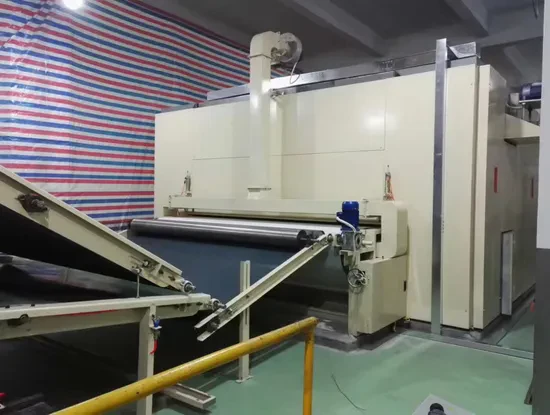

Maximum Thickness Achievable by Our Needle Punched Felt Machines
Based on our extensive experience and the advanced technology incorporated in our machines, we can produce felts with a maximum thickness of up to 100mm. However, this value may vary depending on the specific requirements of the felt, such as density, strength, and surface finish.
For felts with a relatively low density, our machines can easily reach the maximum thickness of 100mm. These low - density felts are often used in applications such as sound insulation and filtration. When producing high - density felts, the achievable thickness may be slightly reduced due to the higher resistance during the needle punching process. But with our optimized machine design and appropriate needle selection, we can still produce high - density felts with a thickness of up to 80mm.
Applications of Thick Felts
Thick felts produced by our needle punched felt machines have a wide range of applications in different industries.
Industrial Applications
In the industrial sector, thick felts are used for machinery protection, vibration damping, and heat insulation. For example, in heavy - duty machinery, thick felts can be installed between different components to reduce vibration and noise, prolonging the service life of the equipment. They can also be used as insulation materials in high - temperature environments, protecting the surrounding equipment and personnel.
Construction Industry
In the construction industry, thick felts are used for soundproofing and thermal insulation in buildings. They can be installed on walls, ceilings, and floors to improve the acoustic and thermal performance of the building. Thick felts are also used as waterproofing layers in some cases, providing an additional barrier against moisture.
Automotive Industry
In the automotive industry, thick felts are used for interior decoration, sound absorption, and heat insulation. They can be found in car seats, door panels, and engine compartments, enhancing the comfort and safety of the vehicle.
Our Company's Advantages in Producing Needle Punched Felt Machines
As a leading supplier of needle punched felt machines, we have several advantages that enable us to produce high - quality machines capable of manufacturing thick felts.
Advanced Technology
We constantly invest in research and development to incorporate the latest technology into our machines. Our machines are equipped with advanced control systems that can precisely control the needle punching process, ensuring consistent quality and high efficiency. For example, our computer - controlled systems can adjust the punching speed, needle penetration depth, and conveyor belt speed according to the specific requirements of the felt production.
Customization Service
We understand that different customers have different needs for felt production. Therefore, we offer a customization service for our needle punched felt machines. Whether you need a machine to produce felts with a specific thickness, density, or width, we can design and manufacture a machine that meets your exact requirements. Our professional engineering team will work closely with you to understand your needs and provide the best - suited solutions.
After - sales Support
We provide comprehensive after - sales support to our customers. Our technical experts are available 24/7 to provide technical guidance and troubleshooting services. We also offer regular maintenance and repair services to ensure the long - term stable operation of our machines. In addition, we have a large inventory of spare parts, which can be quickly delivered to our customers in case of any machine breakdown.
Related Products and Links
If you are interested in our needle punched felt machines, you may also be interested in our other non - woven products and machines. Check out our High Quality Non - woven Machine, which is designed to produce high - quality non - woven fabrics with excellent performance. Our Equipment Spunbond Non - Woven is another great option for producing non - woven fabrics using the spunbond process. And for those who need colorful non - woven products, our Colorful Non - Woven is the perfect choice.
Contact Us for Purchase and Negotiation
If you are considering purchasing a needle punched felt machine or have any questions about the maximum thickness of felts that our machines can produce, please feel free to contact us. We are more than happy to have in - depth discussions with you, provide detailed product information, and offer competitive quotes. Our team of experts will assist you in choosing the most suitable machine for your specific needs.
References
- "Non - woven Fabric Handbook", edited by John Smith, published by ABC Publishing House.
- "Advanced Needle Punching Technology", written by David Brown, published by XYZ Press.
- Industry reports on non - woven production and applications from well - known research institutions.